Serving the Pacific Northwest and Puget Sound area







Are Your Washington Gutters Clogging Every Winter? The Case for Gutter Guards

Winter in Western Washington brings frequent rainfall, falling leaves, and plenty of debris from the region’s evergreen trees. For homeowners throughout Seattle, Tacoma, Everett, and surrounding communities, keeping gutters clear can become a recurring challenge. When gutters fill with leaves, pine needles, and other debris, rainwater may overflow instead of draining safely away from the home.
If you’re scheduling gutter cleaning multiple times a year or dealing with overflowing gutters every winter, you may be wondering whether there’s a better solution. Gutter guards can reduce debris buildup and make ongoing maintenance easier, but choosing the right system matters.
In this guide, we’ll explore why Washington gutters clog so frequently, how gutter guards work, and whether installing gutter protection is a worthwhile investment for your home.
Why Do Gutters Clog So Frequently During Washington Winters?
Western Washington’s mature trees, frequent rainfall, and damp conditions create an environment where gutter debris can accumulate quickly. Even gutters cleaned earlier in the fall can develop blockages as winter weather continues.
Several factors contribute to recurring gutter clogs:
-
Fallen leaves: Deciduous trees shed leaves throughout autumn, and wind can carry them onto roofs and into gutters.
-
Pine and fir needles: Evergreen trees shed needles year-round, creating fine debris that can accumulate around downspout openings.
-
Moss and roof debris: Loose moss, roofing granules, and other material may wash into gutters during heavy rainfall.
-
Small branches and twigs: Winter storms can deposit debris along rooflines and inside drainage channels.
-
Persistent rainfall: Frequent rain moves accumulated debris toward downspouts, where blockages may develop.
-
Improper gutter slope: Gutters that don’t drain properly can let water and debris collect.
-
Blocked downspouts: Even relatively clear gutters may overflow when water cannot move through the downspout.
Homes surrounded by mature trees often clog more often than properties with limited overhead vegetation. Understanding the type of debris affecting your home is an important first step toward choosing an effective gutter protection solution.
What Happens When Your Gutters Keep Clogging?
Gutters collect rainwater from the roof and direct it through downspouts away from the home. When debris blocks drainage, water may overflow and reach areas not meant for repeated moisture exposure.
Common problems associated with clogged gutters include:
-
Water overflow: Rainwater spills over gutter edges instead of moving through the drainage system.
-
Fascia deterioration: Repeated moisture exposure can damage wooden fascia boards.
-
Siding damage: Overflowing water may run down exterior walls, causing staining or increasing the risk of moisture intrusion.
-
Foundation concerns: Excess water collecting near the foundation can contribute to drainage problems around the home.
-
Landscape erosion: Concentrated runoff may wash away soil, mulch, or landscaping materials.
-
Gutter damage: Heavy debris and standing water can place additional stress on gutters and their mounting hardware.
-
Winter ice accumulation: Water trapped in clogged gutters may freeze during colder periods.
Not every clogged gutter causes significant property damage. However, repeated overflow can increase the likelihood of moisture-related problems, particularly during Washington’s extended rainy season.
How Do Gutter Guards Work?
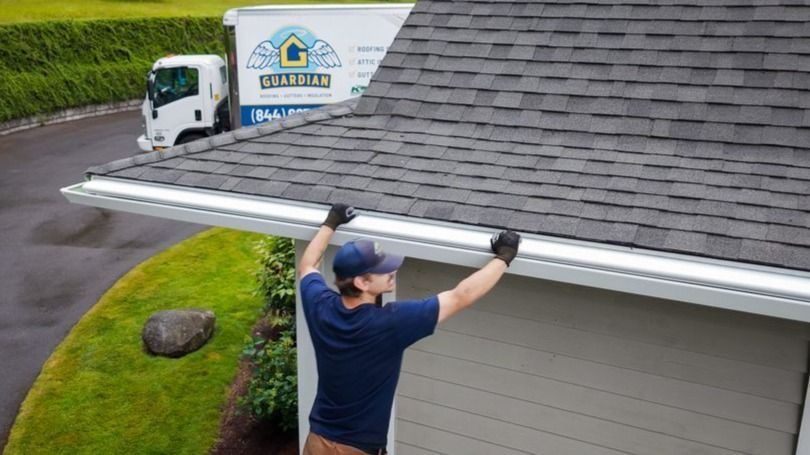
Gutter guards are protective systems installed over or within gutter openings to keep leaves, needles, and other debris out. They let rainwater flow into the gutters while limiting material that can cause blockages.
Several gutter protection designs are available:
-
Micro-mesh gutter guards: Fine mesh openings help block smaller debris, including many types of leaves and needles.
-
Screen gutter guards: Perforated or mesh covers keep larger debris out while letting water through.
-
Surface-tension systems: These designs guide water into the gutter while directing some debris away from the opening.
-
Other protective covers: Different materials and opening configurations provide varying levels of debris protection.
Each design has advantages and limitations. Performance depends on the type of debris, rainfall intensity, roof pitch, gutter condition, and installation quality.
For Washington homeowners, choosing a system that handles both frequent rainfall and fine evergreen debris is especially important.
What Are the Benefits of Gutter Guards for Washington Homes?
Gutter guards offer several practical benefits for homes with recurring drainage problems. While they don’t eliminate maintenance, they can reduce debris entering the system and make seasonal upkeep easier.
Potential benefits include:
-
Reduced debris accumulation: Gutter guards help prevent substantial amounts of leaves, twigs, and other material from entering drainage channels.
-
Fewer recurring clogs: Limiting debris buildup may reduce the frequency of blockages around gutters and downspouts.
-
Less frequent gutter cleaning: Homeowners may need fewer complete gutter cleanings, although periodic inspections and maintenance remain necessary.
-
More consistent drainage: Reducing debris buildup can help rainwater reach downspouts more effectively.
-
Reduced maintenance demands: Homes surrounded by mature trees may benefit from fewer recurring debris-removal tasks.
-
Improved rainy-season preparation: Properly selected guards can help reduce clog-related overflow during periods of frequent rainfall.
-
Long-term convenience: Homeowners may spend less time scheduling repeated gutter-cleaning appointments.
These benefits are especially relevant for properties with significant overhead tree coverage. However, gutter guards cannot correct problems caused by improper gutter slope, undersized drainage components, or blocked underground drains.
A professional evaluation can help determine whether gutter protection alone is appropriate or if the existing drainage system needs additional attention.
Are Gutter Guards Effective Against Pine Needles, Leaves, and Moss?
One of the biggest considerations for Washington homeowners is the variety of debris that reaches their gutters. The Pacific Northwest’s evergreen trees and damp conditions create challenges that differ from those in regions with fewer trees or less rainfall.
Many gutter guard designs block leaves more easily because they are larger. However, leaves can still accumulate on top of protective covers and may need to be removed.
Pine and fir needles can be more challenging because their narrow shape allows them to pass through some larger openings. Fine-mesh systems may reduce this problem, although needles can also collect across the surface and restrict water flow.
Moss presents another concern for Washington homes. Loose moss can wash off roofing materials and accumulate on guards or around openings. Gutter guards don’t prevent moss growth on the roof itself.
Fine roofing granules and other small particles may also pass through certain protection systems. This means occasional gutter inspections remain important even after you install guards.
No gutter guard system completely eliminates maintenance. Choosing the right design and keeping the system free of surface debris are essential for dependable performance.
Are Gutter Guards Worth It for Your Washington Home?
Whether gutter guards are worth installing depends on your property’s conditions and how frequently your gutters require attention. For homeowners dealing with recurring winter clogs, gutter protection may offer meaningful long-term convenience.
Several factors can help determine whether installation makes sense:
-
Tree coverage: Homes surrounded by mature fir, cedar, pine, or deciduous trees may experience more frequent debris accumulation.
-
Cleaning frequency: Gutters that require repeated cleaning throughout the year may benefit from additional protection.
-
Debris type: Fine needles and moss may require different protection considerations than larger leaves.
-
Roof accessibility: Multi-story homes or difficult rooflines can make routine gutter maintenance more challenging.
-
Existing gutter condition: Damaged, improperly pitched, or undersized gutters may need repairs before installing guards.
-
Installation expenses: Consider the upfront cost alongside expected maintenance needs.
-
Long-term upkeep: Even protected gutters require occasional inspections and cleaning.
For example, a two-story Seattle home surrounded by mature evergreen trees may benefit more from gutter guards than a single-story property with limited nearby vegetation.
The decision should balance installation costs, recurring cleaning needs, and the expected reduction in debris accumulation. While gutter guards can reduce maintenance demands, they don’t guarantee a specific amount of savings.
Why Does Professional Gutter Guard Installation Matter?
Proper installation is essential for getting the most from a gutter protection system. Guards must fit the existing gutters, accommodate the roof configuration, and let rainwater in without creating unnecessary drainage restrictions.
Before installation, a professional should evaluate the existing gutter system’s condition and performance.
Important considerations include:
-
Gutter condition: Damaged sections, loose attachments, or improper slopes may need correction before installing guards.
-
System compatibility: The selected guards should fit the gutter dimensions and roof configuration.
-
Drainage capacity: Gutters and downspouts must handle the water collected from the roof.
-
Surrounding vegetation: Nearby trees and common debris types should influence guard selection.
-
Roof protection: Installation methods should avoid compromising roofing materials or drainage details.
-
Maintenance access: The system should allow for future inspections and debris removal.
-
Secure installation: Proper attachment helps guards remain in place during wind and heavy rainfall.
Professional installation also helps identify drainage problems that gutter guards can’t fix.
For example, a home with undersized gutters or improperly positioned downspouts may require additional improvements to manage rainwater effectively.
Explore Gutter Protection With Guardian Roofing, Gutters & Insulation
Recurring gutter clogs are a common challenge for Western Washington homeowners, especially in neighborhoods surrounded by mature trees. While regular cleaning remains important, gutter guards can reduce debris buildup and make ongoing maintenance easier.
At Guardian Roofing, Gutters & Insulation, we help homeowners throughout Seattle, Tacoma, Everett, and surrounding Washington communities address gutter concerns and explore appropriate protection solutions. Whether your gutters overflow during heavy rainfall or need frequent cleaning from leaves and evergreen needles, evaluating your drainage system can help you choose the best approach.
If you’re tired of clogged gutters every winter, contact Guardian Roofing, Gutters & Insulation today. Our team can help assess your gutter system and discuss protection options that support dependable drainage throughout Washington’s rainy seasons.


Schedule Your Service With Us Today
Offering 5-Star Service To The PNW and puget sound Area