Serving the Pacific Northwest and Puget Sound area






Why Roofs in Western Washington Wear Out Faster Than Most Homeowners Realize
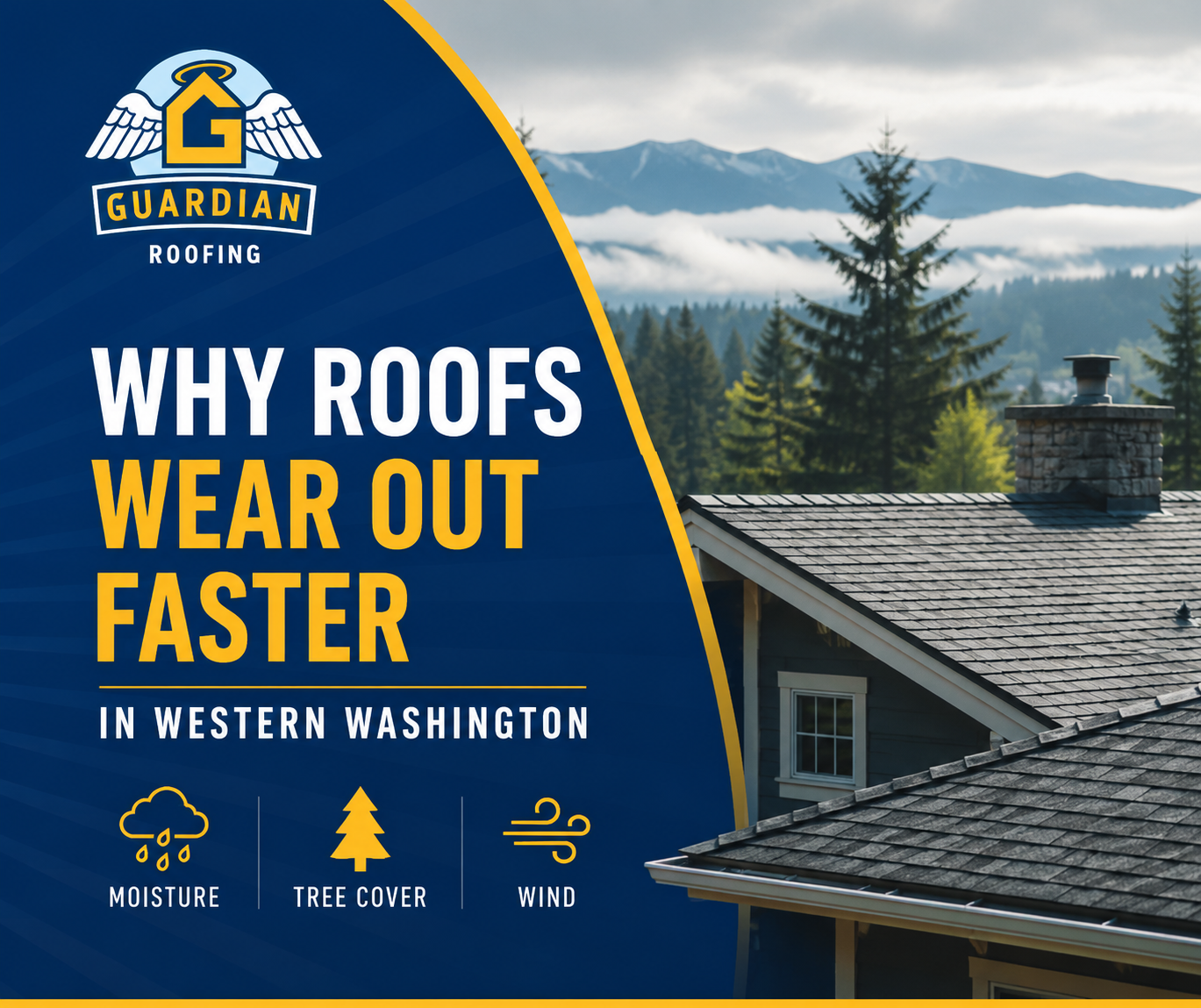
Replacing a roof is one of the largest investments most homeowners make, so it’s reasonable to expect decades of dependable performance. Yet across Western Washington, roofs often begin showing signs of wear long before homeowners expect.
The reason isn’t simply rain. It’s the combination of nearly year-round moisture, dense evergreen forests, seasonal windstorms, fluctuating temperatures, and prolonged periods where roofs never fully dry. Those conditions gradually break down roofing materials, clog drainage systems, and create ideal environments for moss and algae.
Understanding how our region affects your home can help you recognize problems early and avoid expensive repairs.
It’s Moisture, Not Rainfall, That Causes The Biggest Problems
Western Washington’s climate is different from areas that receive heavy thunderstorms followed by sunshine. Here, roofs often remain damp for days at a time.
Even after the rain stops, overcast skies, cool temperatures, and shaded roof surfaces prevent shingles from drying quickly.
Over time, that persistent moisture contributes to:
- Moss and algae growth
- Premature shingle deterioration
- Rusting roof flashings
- Softened roof decking
- Hidden roof leaks
- Shorter roof lifespan
Many roofing problems develop slowly, making annual inspections one of the best ways to catch issues before water reaches the inside of your home.
Trees Protect Your Home, But They Also Challenge Your Roof
One of the defining characteristics of Western Washington neighborhoods is the abundance of mature evergreens. While they provide privacy and shade, they also create conditions that accelerate roof deterioration.
Common issues include:
- Pine needles collecting in roof valleys
- Leaves clogging gutters
- Branches scraping shingles during storms
- Moss thriving on shaded roof slopes
- Organic debris trapping moisture against roofing materials
Homes surrounded by large cedar and fir trees typically require more roof and gutter maintenance than properties with greater sun exposure.
Wind Damage Doesn’t Only Happen Along The Coast
Strong winter storms regularly move across Western Washington, but the impact varies from one community to another.
Open farmland, river valleys, waterfront neighborhoods, and elevated terrain often experience stronger gusts than heavily wooded residential areas.
Wind can cause:
- Lifted shingles
- Damaged ridge caps
- Loose flashing
- Fallen tree limbs
- Water intrusion beneath roofing materials
Many homeowners don’t discover wind damage until months later when a ceiling stain finally appears.
Your Gutters Are The First Line Of Defense Against Water Damage
A roof can only perform as well as the drainage system supporting it.
When gutters become clogged or begin pulling away from the house, water can overflow behind siding, saturate fascia boards, and collect around the foundation.
Some of the most common causes of gutter problems include:
- Fir needles
- Maple leaves
- Moss washing off the roof
- Improper gutter pitch
- Aging seams
- Storm debris
Keeping gutters flowing properly protects far more than the roof itself.
Don’t Overlook Your Attic
Many homeowners think of attic insulation strictly as an energy-saving upgrade, but it also plays an important role in protecting the roofing system.
When insulation has settled, or ventilation isn’t performing properly, warm indoor air can create excess moisture inside the attic. Over time, condensation can affect roof decking and contribute to premature deterioration.
Proper attic insulation helps:
- Improve indoor comfort
- Reduce heat loss
- Maintain consistent attic temperatures
- Limit condensation
- Improve overall energy efficiency
Roofing, gutters, and attic insulation work together as one complete system.
How Roofing Challenges Change Across Western Washington
Although Western Washington shares the same general climate, every community has its own environmental conditions that affect how roofs age.
Coastal Communities
Homes near Puget Sound and the Salish Sea experience some of the region’s harshest weather. Marine air, higher humidity, and stronger seasonal winds place additional stress on roofing materials throughout the year.
Homeowners in Anacortes often deal with coastal moisture, salt air, and exposed rooflines that require regular inspections.
Likewise, homes in Tulalip experience weather systems moving directly across Possession Sound, making reliable roofing and drainage especially important.
The Skagit Valley
The Skagit Valley creates a different environment altogether.
Morning fog, open farmland, nearby rivers, and long periods of damp weather allow roofs to stay wet much longer than they would in sunnier climates.
Homeowners in Burlington often contend with wind-driven rain crossing the valley, while nearby Sedro-Woolley combines dense evergreen forests with prolonged moisture, making moss one of the most common roofing concerns.
Wooded Acreage Properties
Homes built on larger wooded lots face maintenance challenges that suburban neighborhoods often don’t.
Tall trees continually drop needles, cones, branches, and leaves onto roofs throughout the year. Shade also allows moisture to linger far longer after storms.
These conditions are common throughout Maltby, where many homes sit beneath mature cedar and Douglas fir trees.
Routine roof and gutter inspections are especially valuable for properties with extensive tree coverage.
Communities Influenced By Both Valley And Marine Weather
Some areas experience weather from multiple environments at once.
Homes throughout Stanwood are influenced by marine air from Port Susan, moisture from the Stillaguamish Valley, and seasonal storms arriving from Puget Sound. That combination creates nearly year-round demands on roofing systems, gutters, and attic insulation.
Signs Your Roof May Need Attention
Small roofing problems rarely stay small.
Watch for warning signs such as:
- Water stains on ceilings
- Moss spreading across shingles
- Missing or curling shingles
- Overflowing gutters
- Granules collecting near downspouts
- Rusted or lifted flashing
- Sagging gutter sections
- Cold or drafty upstairs rooms
Addressing these issues early is almost always less expensive than waiting for an active leak.
Protect Your Home Before The Next Storm
Western Washington’s weather isn’t changing anytime soon, but proactive maintenance can significantly extend the life of your roof.
Regular inspections, clean and properly functioning gutters, and adequate attic insulation all work together to protect your home against moisture, wind, and seasonal weather. Whether you live along the coast, in the Skagit Valley, or on a wooded property surrounded by evergreens, staying ahead of small problems is one of the best investments you can make in your home.

Schedule Your Service With Us Today
Offering 5-Star Service To The PNW and puget sound Area