Serving the Pacific Northwest and Puget Sound area






Is It Time for New Gutters? 5 Signs Your Home Is at Risk
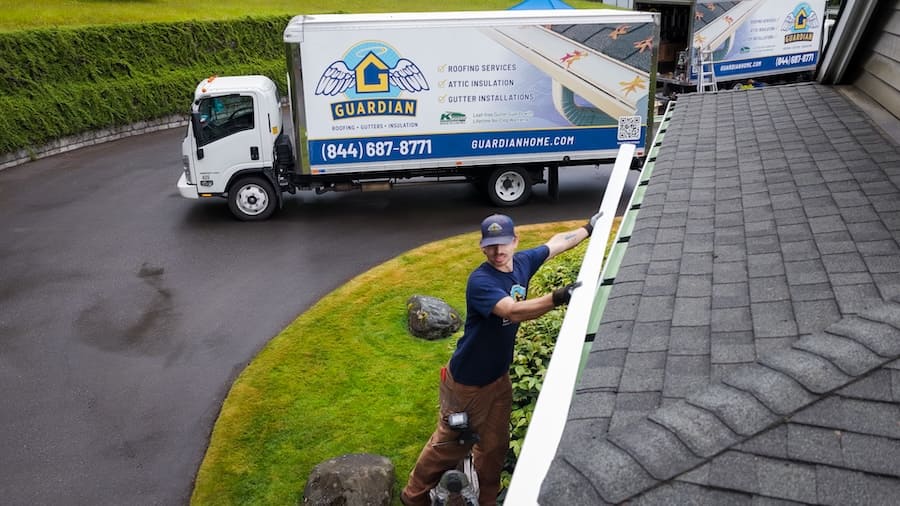
Your gutters are the unsung heroes of your home’s exterior. In the Pacific Northwest, where heavy rain is a seasonal guarantee, they perform the vital job of channeling thousands of gallons of water away from your roof, siding, and foundation.
However, gutters aren’t meant to last forever. When they begin to fail, the resulting water damage can lead to costly structural repairs. At Guardian Roofing, we want to help you spot the trouble before the next big storm.
Here are the top 5 signs that it’s time to retire your old gutters and upgrade to a high-performance system:
1. Visible Cracks or Splits
Even a small crack might seem like a minor issue, but during a heavy downpour, it becomes a major liability. Water leaking through a split can pour directly onto your fascia boards or accumulate against your foundation.
What to look for: Check your gutters on a dry day for small cracks. If you see water dripping from the middle of a gutter during rain, that’s a clear sign the material has compromised.
2. Peeling Paint or Orange Rust Spots
Most modern gutters are treated with a protective coating. Once you see paint bubbling or peeling, it’s a sign that water is permanently sitting in the gutter or that the material is beginning to corrode.
The Danger of Rust: For older steel gutters, rust is the beginning of the end. If you see orange flecks or “rust tea” stains on your siding, the metal is thinning and will soon develop holes.
3. Sagging or Pulling Away from the Roofline
Gutters should be tight against your home. If you notice a gap between the gutter and the roofline, or if the gutters seem to be “leaning” forward, the fasteners (hangers) are likely failing.
Why it happens: This is often caused by the weight of debris, standing water, or ice dams. Once a gutter sags, it loses its “pitch,” meaning water will pool in the low spots instead of flowing toward the downspouts.
4. Water Marks and Mildew on Siding
Sometimes the best way to tell if your gutters are failing is to look at your house, not the gutters themselves. If you see dark “tiger stripes” on the outside of your gutters or green mildew/mold on your siding, water is likely overflowing or leaking behind the system.
Hidden Damage: This moisture can rot your fascia boards and soak into your attic insulation, leading to mold growth inside your home.
5. Pooling Water and Eroded Landscaping
Your gutters’ only job is to move water away from your home. If you walk outside after a storm and find “trenches” in your mulch or puddles of water standing right next to your foundation, your gutters aren’t doing their job.
Foundation Risk: Persistent pooling water is the leading cause of foundation cracks and basement flooding. If your downspouts aren’t directing water far enough away, or if the gutters are overflowing, your home’s structural integrity is at risk.
Don’t Wait for a Leak to Act
If you’ve noticed any of these signs, it’s time for a professional evaluation. Upgrading to seamless gutters can eliminate many of these common failure points, providing better protection and a cleaner look for your home.
Ready for a Gutter Health Check? Contact the experts at Guardian Roofing, Gutters & Insulation today. We provide thorough inspections and custom-fit gutter solutions designed to withstand the toughest Washington weather.


Schedule Your Service With Us Today
Offering 5-Star Service To The PNW and puget sound Area